This is a website about Andrej A. Romanovsky's research on thermoregulation
Andrej Romanovsky's FeverLab was known as the Thermoregulation Laboratory and, later, as the Thermoregulation and Systemic Inflammation Laboratory. The Thermoregulation Laboratory was associated with Legacy Health System, Portland, Oregon, USA, and worked from December 1994 to January 2000. The Thermoregulation and Systemic Inflammation Laboratory was associated with the Trauma Program at Dignity Health (d.b.a. St. Joseph's Hospital and Medical Center d.b.a. Barrow Neurological Institute) presently CommonSpirit Health, Phoenix, Arizona, USA; it was opened in December 1999 and closed in September 2019, when Andrej retired from laboratory research.
The Publications page of this website is updated regularly, as Andrej continues publishing the research conducted by his FeverLab and participates in new research projects, primarily as a consultant. All other pages of this website are kept for historical account.
Research focus 1 | Research focus 2 | Research focus 3 | Research focus 4 | Research focus 5 | Featured study | Featured review | In the press
Research focus 1: Body temperature control: Thermoregulation concepts
|
|
|
Romanovsky AA. The thermoregulation system and how it works. Hand Clin Neurol 156: 3-43, 2018.
Romanovsky AA. Skin temperature: its role in thermoregulation. Acta Physiol 210, 498-507, 2014.
Rance NE, Dacks PA, Mittelman-Smith MA, Romanovsky AA, Krajewski-Hall SJ. Modulation of body temperature and LH secretion by hypothalamic KNDy (kisspeptin, neurokinin B and dynorphin) neurons: A novel hypothesis on the mechanism of hot flushes. Front Neuroendocrinol 34: 211-227, 2013.
Romanovsky AA. Thermoregulation: some concepts have changed. Functional architecture of the thermoregulatory system. Am J Physiol 292: R37-R46, 2007.
Romanovsky AA, Ivanov AI, Shimansky YP. Selected contribution: Ambient temperature for experiments in rats: a new method for determining the zone of thermal neutrality. J Appl Physiol 92: 2667-2679, 2002. |
Back to top
Research focus 2: Roles of transient receptor potential (TRP) channels in thermoregulation
|
|
|
de Oliveira C, Garami A, Lehto SG, Pakai E, Tekus V, Pohoczky K, Youngblood BD, Wang W, Kort ME, Kym PR, Pinter E, Gavva NR, Romanovsky AA.Transient receptor potential channel ankyrin-1 is not a cold sensor for autonomic thermoregulation in rodents. J Neurosci 34: 4445-4452, 2014.
Almeida MC, Hew-Butler T, Soriano RN, Rao S, Wang W, Wang J, Tamayo N, Oliveira DL, Nucci TB, Aryal P, Garami A, Bautista D, Gavva NR, Romanovsky AA. Pharmacological blockade of the cold receptor TRPM8 attenuates autonomic and behavioral cold defenses and decreases deep body temperature. J Neurosci 32: 2086-2099, 2012.
Romanovsky AA, Almeida MC, Garami A, Steiner AA, Norman MH, Morrison SF, Nakamura K, Burmeister JJ, Nucci TB. The transient receptor potential vanilloid-1 channel: a thermosensor it is not. Pharmacol Rev 61: 228-261, 2009.
Steiner AA, Turek VF, Almeida MC, Burmeister JJ, Oliveira DL, Roberts JL, Bannon AW, Norman MH, Louis J-C, Treanor JJS, Gavva NR, Romanovsky AA. Nonthermal activation of transient receptor potential vanilloid-1 channels in abdominal viscera tonically inhibits autonomic cold-defense effectors. J Neurosci 27: 7459-7468, 2007. |
Back to top
Research focus 3: TRPV1 antagonists: Drug development
|
|
|
Garami A, Shimansky YP, Rumbus Z, Vizin RCL, Farkas N, Hegyi J, Szakacs Z, Solymar M, Csenkey A, Chiche DA, Kapil R, Kyle DJ, Van Horn WD, Hegyi P, Romanovsky AA. Hyperthermia induced by transient receptor potential vanilloid-1 (TRPV1) antagonists in human clinical trials: Insights from mathematical modeling and meta-analysis. Pharmacol Ther 208:107474, 2020..
Garami A, Pakai E, McDonald HA, Reilly RM, Gomtsyan A, Corrigan JJ, Pinter E, Zhu DXD, Lehto SG, Gavva NR, Kym PR, Romanovsky AA. TRPV1 antagonists that cause hypothermia, instead of hyperthermia, in rodents: Compounds' pharmacological profiles, in vivo targets, thermoeffectors recruited and implications for drug development. Acta Physiol 223: e13038, 2018.
Garami A, Shimansky YP, Pakai E, Oliveira DL, Gavva NR, Romanovsky AA. Contributions of different modes of TRPV1 activation to TRPV1 antagonist-induced hyperthermia. J Neurosci 30: 1435-1440, 2010.
Gavva NR, Treanor JJS, Garami A, Fang L, Surapaneni S, Akrami A, Alvarez F, Bak A, Darling M, Gore A, Jang GR, Kesslak JP, Ni L, Norman MH, Palluconi G, Rose MJ, Salfi M, Tan E, Romanovsky AA, Banfield C, Davar G. Pharmacological blockade of the vanilloid receptor TRPV1 elicits marked hyperthermia in humans. Pain 136: 202-210, 2008. |
Back to top
Research focus 4: Behavioral thermoregulation: Pathways and mechanisms
|
|
|
Wanner SP, Almeida MC, Shimansky YP, Oliveira DL, Eales JR, Coimbra CC, Romanovsky AA. Cold-Induced thermogenesis and Inflammation-associated cold-seeking behavior are represented by different dorsomedial hypothalamic sites: a three-dimensional functional topography study in conscious rats. J Neurosci 37: 6956-6971, 2017.
Garami A, Pakai E, Oliveira DL, Steiner AA, Wanner SP, Almeida MC, Lesnikov VA, Gavva NR, Romanovsky AA. Thermoregulatory phenotype of the Trpv1 knockout mouse: thermoeffector dysbalance with hyperkinesis. J Neurosci 31: 1721-1733, 2011.
Almeida MC, Steiner AA, Branco LGS, Romanovsky AA. Neural substrate of cold-seeking behavior in endotoxin shock. PLoS One 1: e1, 2006.
Romanovsky AA, Shido O, Sakurada S, Sugimoto N, Nagasaka T. Endotoxin shock: thermoregulatory mechanisms. Am J Physiol 270: R693-R703, 1996. |
Back to top
Research focus 5: Thermoregulation in systemic inflammation: Fever and hypothermia: Physiological mechanisms and mediators
|
| |
Garami A, Steiner AA, Romanovsky AA. Fever and hypothermia in systemic inflammation. Handb Clin Neurol 157: 565-597, 2018.
Saper CB, Romanovsky AA, Scammell TE. Neural circuitry engaged by prostaglandins during the sickness syndrome. Nat Neurosci 15: 1088-1095, 2012.
Steiner AA, Romanovsky AA. Leptin: At the crossroads of energy balance and systemic inflammation. Prog Lipid Res 46: 89-107, 2007.
Steiner AA, Ivanov AI, Serrats J, Hosokawa H, Phayre AN, Robbins JR, Roberts JL, Kobayashi S, Matsumura K, Sawchenko PE, Romanovsky AA. Cellular and molecular bases of the initiation of fever. PLoS Biol 4: e284, 2006.
Steiner AA, Chakravarty S, Rudaya AY, Herkenham M, Romanovsky AA. Bacterial lipopolysaccharide fever is initiated via Toll-like receptor 4 on hematopoietic cells. Blood 107: 4000-4002, 2006. |
Click on the image to read about sected findings. PDFs of all publications listed can be downloaded or requested from the Publications page.
Back to top
Featured study
|
Even though insulating and heating technologies have become more sophisticated, the overall approach used by modern humans to defend body temperature against cold — insulating and heating themselves — is no different from the one used by the caveman. The study by Almeida et al. proposes a different approach: modulating deep body temperature by blocking temperature signals that drive thermoeffector responses by drugs.
In the study entitled "Pharmacological blockade of the cold receptor TRPM8 attenuates autonomic and behavioral cold defenses and decreases deep body temperature" (J Neurosci 32: 2086-2099, 2012), we used M8-B, a selective and potent antagonist of the transient receptor potential melastatin-8 (TRPM8) channel. M8-B decreased deep body temperature in Trpm8+/+ mice and rats, but not in Trpm8-/- mice, thus suggesting an on-target action. M8-B attenuated cold-induced c-Fos expression in the lateral parabrachial nucleus, thus indicating a site of action within the cutaneous cooling neural pathway to thermoeffectors, presumably on sensory neurons. At tail skin temperatures < 23°C, the magnitude of the M8-B-induced decrease in body temperature was inversely related to skin temperature, thus suggesting that M8-B blocks thermal (cold) activation of TRPM8. The TRPM8-antagonist-induced hypothermia is the first example of a change in the deep body temperature of an animal occurring due to demonstrated pharmacological blockade of temperature signals at the thermoreceptor level. A new discipline — thermopharmacology — has emerged. See comment on this study in the Scientific American. |
|

Nancy L. Romanovsky. 2012 © All rights reserved
|
Back to top
Featured review
|
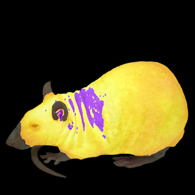
Several recent papers from the leading laboratories published in the leading journals state that skin temperature is a feedforward signal for the thermoregulation system. In our latest review (Skin temperature: its role in thermoregulation. Acta Physiol 210, 498–507, 2014) we argue that this popular view is erroneous.
The body is covered mostly by hairy (non-glabrous) skin, which is typically insulated from the environment (with clothes in humans and with fur in non-human mammals). Thermal signals from hairy skin represent a temperature of the insulated superficial layer of the body and provide feedback to the thermoregulation system. This feedback is auxiliary, both negative and positive. It reduces the system’s response time and load error.
Non-hairy (glabrous) skin covers specialized heat-exchange organs (e.g., the hand), which are also used to explore the environment. In thermoregulation, these organs are primarily effectors. Their main thermosensory-related role is to assess local temperatures of objects explored; these local temperatures are feedforward signals for various behaviours. Non-hairy skin also contributes to the feedback for thermoregulation, but this contribution is limited.
Autonomic (physiological) thermoregulation does not use feedforward signals. Thermoregulatory behaviours use both feedback and feedforward signals. |
|
Romanovsky, Acta Physiol, 2014
|
Back to top
In the press
| Andrej Romanovsky ... As a physiologist (Fis-ee-OL-oh-gizt), he studies how the body functions. ScienceNewsForStudents.org, September 18, 2016
A leading expert on fever. New York Times, August 7, 2007
Knows a thing or two about thermosensing. New Yorker, September 24, 2007
Romanovsky and colleagues dub [the term] "thermopharmacology". Scientific American, February 12, 2012 |
 Join the thousands
who follow us on Twitter |
|
Back to top
|